The Future of Notarization: AI & Blockchain
Notarization, RON Technology, Blockchain Document Integrity
The Future of Notarization: AI, Invisible Workflows & Cross-Border Document Trust
By 2026, notarization will look less like a stamped piece of paper and more like a secure, intelligent layer inside every serious digital transaction. For real estate professionals, attorneys, title companies, business owners, and tech-forward individuals, the question is no longer whether notarization will go digital—it is how quickly you can align with the next wave of trust technology.
Why the Future of Notarization Is Being Rewritten Now
The rapid adoption of remote online notarization (RON) in recent years has already transformed how closings, powers of attorney, and business agreements are executed. Industry observers, including the National Notary Association and the American Bar Association, expect remote online notarization 2026 to be mainstream, supported by mature regulations, advanced identity verification, and standardized digital evidence trails.
NotaryChain is built for this next chapter—combining mobile notary services, RON technology, and Hedera-backed blockchain document integrity into a cohesive, secure experience. Below, we explore four key developments shaping the future of notarization and what they mean for your real estate deals, legal practice, and cross-border transactions.
1. AI-Assisted Document Checks: Reducing Human Error in Closing Packages
Even seasoned professionals know that closing packages are vulnerable to small but costly mistakes—missing initials, outdated riders, inconsistent borrower names, or mismatched legal descriptions. As transaction volumes increase and timelines compress, relying on manual review alone is no longer sustainable. This is where AI notarization becomes a practical advantage rather than a buzzword.
By 2026, AI-assisted tools will routinely scan document sets before, during, and after a RON session. These systems can:
Cross-check names, dates, and property addresses across all documents to flag inconsistencies in real time.
Identify missing signatures, initials, or notarial certificates before the session ends, reducing redraws and re-signs.
Highlight potential risk indicators—such as altered pages, unusual signing patterns, or mismatched ID data—for additional human review.
For example, in a complex commercial closing with dozens of documents, an AI engine integrated into NotaryChain’s digital document workflows can alert the notary and title team that the guarantor’s middle initial is missing on three pages, or that one exhibit references an outdated purchase price. Instead of discovering these issues after funding, you resolve them in-session—saving days of delay and preserving client confidence.
📌 Key Takeaway: AI does not replace the notary’s judgment; it augments it by catching subtle errors and anomalies that slip past even careful human review.
2. Government & Enterprise Platforms Embedding Notarization Natively
The next phase of RON technology is about integration, not isolation. Rather than sending clients to separate portals or physical locations, leading government and enterprise platforms are embedding notarization directly into their systems. This shift mirrors broader digital transformation trends highlighted by the National Notary Association and recent ABA reports on electronic trust services.
Imagine:
A county e-recording portal that automatically triggers a NotaryChain RON session when a deed is uploaded, then submits the notarized version directly to the recorder.
A banking platform where business owners can open accounts, sign resolutions, and complete notarizations in a single, secure digital flow—without ever leaving the app.
A law firm portal that embeds NotaryChain’s RON technology into its client intake and closing workflows, logging every notarization event to a compliant audit trail.
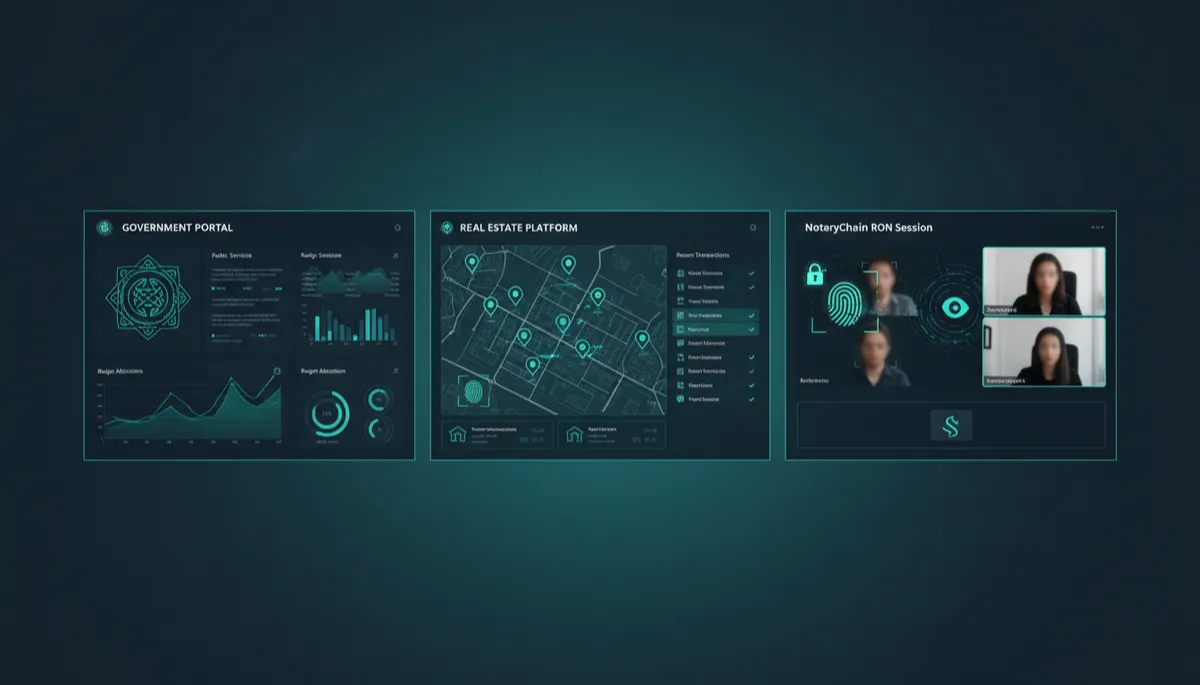
Embedded notarization turns fragmented tasks into one streamlined, compliant digital transaction.
For enterprises, this means fewer handoffs, fewer logins, and fewer opportunities for error. For regulators, it means stronger, more transparent records. For your clients, it simply feels faster and more professional.
💡 Pro Tip: If your platform handles high-value agreements, start planning now for native RON integration. NotaryChain can help architect a solution that fits your compliance and UX requirements.
3. Cross-Border Notarization & Hedera-Powered Blockchain Document Integrity
Global commerce increasingly depends on documents that must be trusted across borders—loan agreements, corporate resolutions, powers of attorney, IP assignments, and more. Frameworks such as the Hague Apostille Convention and the EU’s eIDAS regulation are already paving the way for interoperable electronic trust services. By 2026, we can expect more jurisdictions to adopt digital-friendly rules and recognition frameworks for electronic notarization.
Yet legal recognition is only half the equation. The other half is technical assurance—verifiable proof that the document you receive in another country is the same one that was executed and notarized originally. This is where blockchain document integrity becomes indispensable.
NotaryChain leverages Hedera’s distributed ledger to timestamp and hash notarized documents. The document itself remains securely stored within compliant systems, but its unique cryptographic fingerprint is anchored immutably on-chain. Any party with the document can later:
Recalculate its hash and compare it to the Hedera record to confirm it has not been altered since notarization.
Verify the timestamp and associated transaction metadata, even if they are in a different jurisdiction or using a different local system.
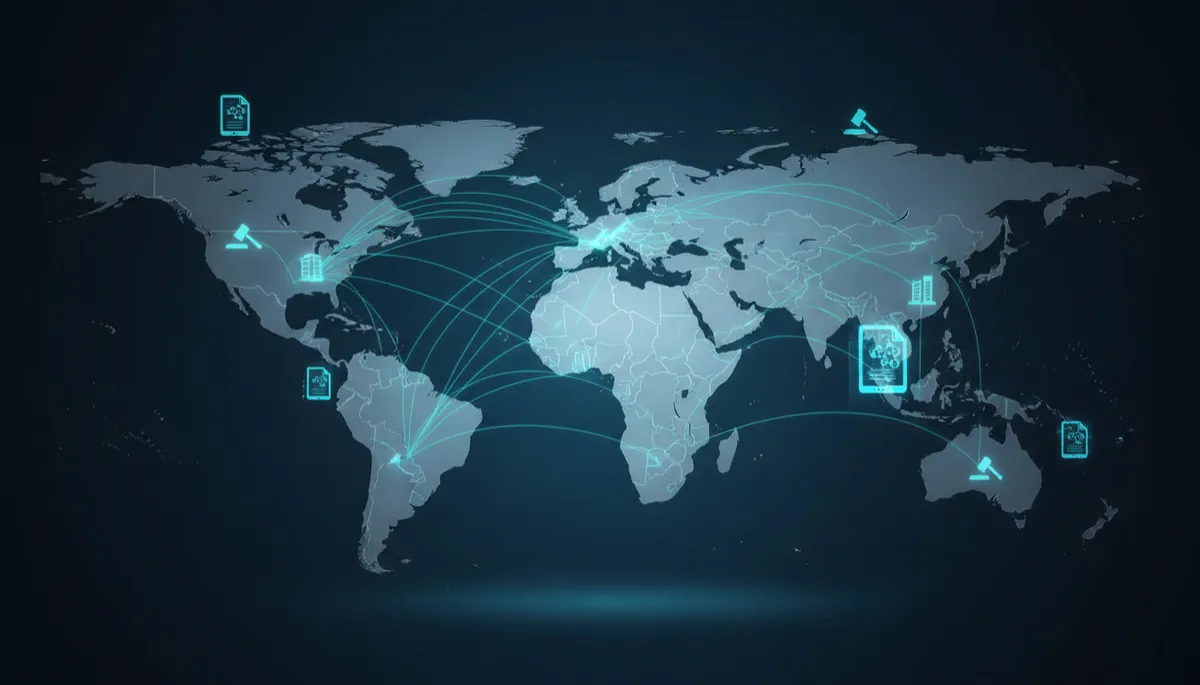
Blockchain timestamps create a shared, tamper-evident record that travels across borders.
For cross-border notarization, this means a bank in one country, a court in another, and a corporate counsel team in a third can all rely on the same objective, cryptographic proof. Combined with evolving international frameworks, Hedera-backed integrity gives your documents a resilient, globally verifiable trust layer.
⚠️ Important: Legal recognition of electronic and cross-border notarization remains jurisdiction-specific. Always confirm local requirements with qualified counsel before relying on digital documents for international use.
4. Notarization Becomes Invisible: Trust as a Background Service
Historically, notarization has been an offline errand—a separate appointment, a separate location, and often a separate frustration. The emerging model is the opposite: notarization becomes invisible, embedded directly into the digital experiences your clients already use.
In this new paradigm, a client might:
Complete a real estate purchase agreement in their title company’s portal, where NotaryChain automatically schedules and conducts the RON session without any separate sign-up process.
Sign a power of attorney through their attorney’s client portal, where identity verification, recording of the video session, and blockchain timestamping all occur behind the scenes.
Execute a cross-border loan agreement inside a fintech platform that quietly routes notarization to NotaryChain, ensuring jurisdictional compliance and audit-ready logs.
The client experiences a single, cohesive workflow. The notarization still meets all statutory requirements—identity checks, acknowledgments, certificates, and records—but to the user, it feels like one smooth digital transaction. This is the logical endpoint of digital document workflows: trust infrastructure as a background service.
How NotaryChain Delivers Trust, Security & Practical Innovation
NotaryChain is designed for professionals who need both innovation and rigor. Our platform and mobile notary network emphasize:
Compliance-first RON technology aligned with evolving state and national standards for remote online notarization 2026 and beyond.
AI-assisted checks that support notaries, title teams, and attorneys in catching errors early, not after funding or filing.
Hedera-backed blockchain document integrity for verifiable timestamps and tamper-evident records across jurisdictions.
Integration-ready APIs and workflows that let platforms, firms, and enterprises embed notarization invisibly into their existing systems.
📌 Trust Signal: NotaryChain is built on industry best practices for identity verification, encryption, and audit logging, aligning with guidance from leading notary and legal organizations.
Frequently Asked Questions About the Future of Notarization
Is remote online notarization legal everywhere?
No. RON laws are jurisdiction-specific. Many U.S. states and several international regimes have enacted or are enacting RON statutes and rules, but coverage is not universal. NotaryChain operates within applicable legal frameworks and matches you with commissioned notaries authorized to perform RON technology-enabled sessions in relevant jurisdictions.
Does AI replace the notary or attorney in the process?
No. AI notarization refers to AI-assisted tools that support human professionals by detecting errors, anomalies, or missing elements. Legal responsibility and professional judgment remain with the commissioned notary and, where applicable, the attorney or settlement agent overseeing the transaction.
Will courts and foreign authorities accept blockchain-based evidence?
Courts generally evaluate blockchain records as they would any other digital evidence—based on relevance, authenticity, and reliability. Hedera’s distributed ledger provides a strong technical foundation for blockchain document integrity, but admissibility and legal effect depend on local procedural and substantive law. Always consult local counsel for cross-border use cases.
How can my firm or platform start integrating NotaryChain?
NotaryChain offers flexible integration options for real estate platforms, law firms, title companies, lenders, and fintechs. You can start with a simple referral workflow or move directly to API-based integration for fully embedded, invisible notarization experiences. To explore options, visit NotaryChain.app and book a strategy session with our team.
Jurisdictional Disclaimer
This article provides general information about the future of notarization and related technologies. It is not legal advice. Notarization standards, RON eligibility, cross-border recognition, and evidence rules vary by jurisdiction and may change over time. Before relying on digital or cross-border notarization for a specific transaction, consult qualified legal counsel in the relevant jurisdictions and confirm all regulatory requirements.
The Road Ahead: Turn Future Trends into Today’s Advantage
By 2026, the organizations that lead in trust, speed, and client experience will be those that treat notarization as a strategic capability, not an afterthought. AI-assisted document checks, embedded government and enterprise integrations, cross-border notarization frameworks, and invisible workflows are not distant concepts—they are the emerging standard for serious transactions.
NotaryChain brings these elements together on a single, modern platform—combining mobile notaries, robust RON technology, and Hedera-powered integrity to support real estate professionals, attorneys, title companies, business owners, and tech-forward individuals. Whether you manage hundreds of closings a month or a handful of high-stakes agreements each year, now is the time to align your workflows with where the market is going, not where it has been.
Ready to modernize your notarization experience? Visit NotaryChain.app today to book an appointment, explore integration options, or schedule a demo for your team. Turn notarization from a friction point into a competitive advantage—secure, intelligent, and future-ready.
🚀 Executive Call to Action: If you oversee high-value real estate, maritime, aviation, or private wealth transactions in South Florida, don’t wait for regulations and competitors to set the pace. Lock in uncompromising document security and chain-of-custody integrity now. Visit NotaryChain.app to request an executive briefing, arrange a white-glove onboarding for your firm, or pilot AI-forensic, Hedera-anchored notarization on your next critical deal.
