Prevent Mortgage Fraud with Notary Alerts
Mortgage Fraud, Document Fraud, Identity Theft, Fraud Prevention, Notary Alert Services
How Notary Fraud Alerts Help Stop Mortgage and Document Fraud Before It’s Too Late
As mortgage fraud and sophisticated document fraud schemes grow more advanced, notaries are increasingly finding themselves targeted. Early-warning Notary Alert Services, such as Notary Fraud Alert programs offered in several counties, are emerging as a critical layer of fraud prevention—often the only way a notary learns their credentials have been misused before serious damage is done.
Stay Ahead of Mortgage and Document Fraud
Early alerts help notaries act before damage is done
The Rising Threat: Mortgage Fraud and Document Fraud Targeting Notaries
Mortgage Fraud remains a serious concern in real estate and lending, even as some risk indicators have improved. Recent data shows overall mortgage fraud risk decreased by about 9.3% year over year in early 2026, yet 1 in 129 mortgage applications still shows fraud risk indicators, with investment lending particularly exposed to undisclosed real estate schemes. These complex operations often rely on Document Fraud—forged signatures, fabricated income records, and falsified deeds—to slip past standard checks and exploit lenders, homeowners, and public programs.
At the same time, document forgery itself is entering a new era. Reports for 2026 show a rapid rise in AI-generated forgeries and industrialized template-based fraud, especially in bank statements, invoices, and pay stubs. These documents are frequently used in loan files, refinance packages, and property transactions. When criminals combine these fake records with forged or stolen notary credentials, they can create paperwork that looks legitimate enough to be recorded in official land records or used to obtain large loans.
How Forged or Stolen Notary Credentials Fuel Identity Theft
In many schemes, the notary is not the mastermind—but their professional identity becomes a powerful tool for criminals. Fraudsters may steal a physical seal, copy a digital certificate, or simply recreate a notary’s stamp and signature using high-resolution images found online. Once they have these details, they can notarize fraudulent deeds, liens, and loan documents that appear to be properly executed, opening the door to serious Identity Theft and property theft.
The result is a dangerous mix: convincing forged documents, realistic signatures, and an authentic-looking notary seal. County recorders and lenders may have no immediate reason to suspect anything is wrong. By the time investigators, title companies, or property owners discover the fraud, the paperwork has often been on the books for weeks or months—leaving the notary’s reputation and commission at risk, and victims facing costly legal battles to unwind the damage.
The Hidden Problem: Notaries Often Find Out After Filings Occur
One of the most troubling realities is that most notaries remain unaware their information has been compromised until after fraudulent filings occur. Unlike consumers, who may receive alerts when their credit report changes, notaries typically do not receive automatic notifications when their name, commission number, or seal appears on a recorded document. Unless a title company calls with questions, a property owner disputes a transaction, or law enforcement opens an investigation, the notary may have no idea their credentials have been misused.
This delay is precisely what fraudsters count on. Every day that passes after a fraudulent deed or mortgage is recorded makes it harder to unwind the transaction and easier for criminals to move money, resell properties, or disappear. For the notary, the fallout can include regulatory scrutiny, insurance claims, civil lawsuits, and reputational harm—even when they were clearly a victim of Identity Theft themselves.
Notary Alert Services: An Early Warning System for Fraud Prevention
To close this dangerous information gap, more jurisdictions and technology providers are introducing Notary Alert Services designed specifically to protect notaries from mortgage and document fraud. Programs such as Notary Fraud Alert offered in counties across the country allow notaries to register their name and commission details and then receive notifications whenever a document is recorded using that information.
For example, several county-based Notary Fraud Alert programs send daily, weekly, or monthly summaries listing documents that reference a notary’s name, commission number, or seal. Other systems, like deed fraud guard services, deliver near real-time email alerts whenever a notary’s signature or stamp appears in official recordings. These tools act as an early warning system, giving notaries visibility they simply did not have before. Instead of waiting for a problem to surface months later, a notary can see suspicious activity almost as soon as it hits the public record.
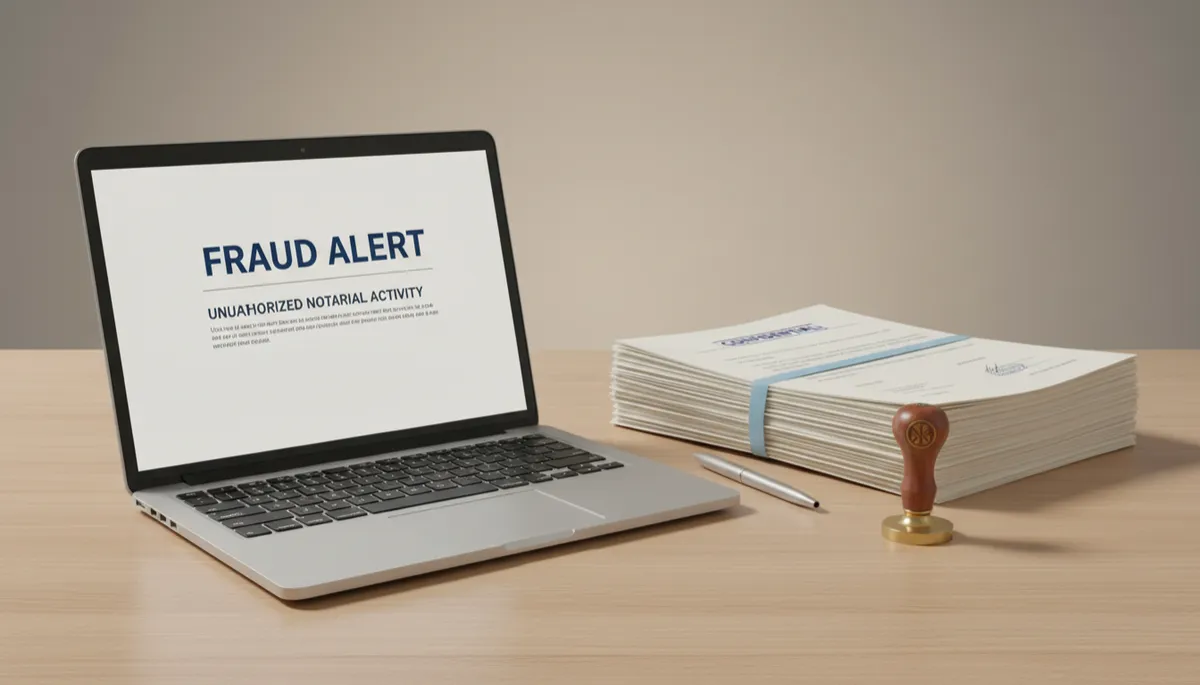
Timely alerts let notaries spot unauthorized use of their seal before fraud escalates.
Taking Swift Action When Suspicious Activity Is Detected
The true power of these systems lies in how quickly notaries can take action when suspicious activity is detected. When a Notary Fraud Alert or similar service flags an unfamiliar document, the notary can immediately:
Review the document details—date, parties, property, and type of instrument—to confirm whether they actually performed the notarization.
Compare the transaction against their notary journal and appointment records for any discrepancies.
Contact the county recorder, title company, or lender to raise concerns and request further review or a hold on the transaction if needed.
Notify their commissioning authority, errors and omissions insurance carrier, or legal counsel if clear evidence of fraud or Identity Theft exists.
Acting quickly can make the difference between a fraudulent deed that is quietly reversed and one that leads to prolonged litigation, foreclosure threats, or major financial loss. From a Fraud Prevention standpoint, early alerts also help investigators connect patterns across multiple properties or counties, exposing broader mortgage fraud rings that might otherwise stay hidden.
Practical Steps Notaries Can Take Today
While technology and legislation continue to evolve, individual notaries can take meaningful steps right now to protect themselves and their clients from Mortgage Fraud and Document Fraud involving forged or stolen credentials:
Enroll in local Notary Alert Services. Check with your county recorder, state notary office, or professional associations to see whether Notary Fraud Alert or similar programs are available where you operate.
Secure your seal and journal. Treat your notary stamp, digital certificate, and records like sensitive identity documents—store them securely and never leave them unattended.
Monitor your name online. Periodically search for your name and commission to ensure images of your seal or signature are not being shared in ways that could be copied or misused.
Stay informed on fraud trends. Follow updates from reputable fraud prevention organizations and notary associations so you understand emerging risks, especially around AI-generated document forgeries and Identity Theft techniques.
📌 Key Takeaway: Without proactive monitoring, notaries often discover misuse of their credentials only after fraudulent filings are on record. Enrolling in Notary Alert Services creates a critical early-warning layer that can stop mortgage and document fraud before it spirals out of control.
Protecting Your Commission, Your Clients, and the Public Record
The landscape of Mortgage Fraud and Document Fraud is changing fast, driven by digital workflows, AI tools, and organized criminal networks. Notaries sit at a critical checkpoint in this ecosystem. When their credentials are forged or stolen, the impact can ripple across homeowners, lenders, and public agencies. By combining strong personal security practices with modern Notary Alert Services like Notary Fraud Alert, notaries gain the visibility and speed they need to respond to suspicious activity before it becomes a crisis.
Ultimately, early-warning systems are not just about protecting a commission; they are about safeguarding the integrity of the public record and the trust that underpins every notarized transaction. In an era of increasingly sophisticated Identity Theft, taking advantage of these tools is no longer optional—it is an essential part of responsible, modern notary practice.
