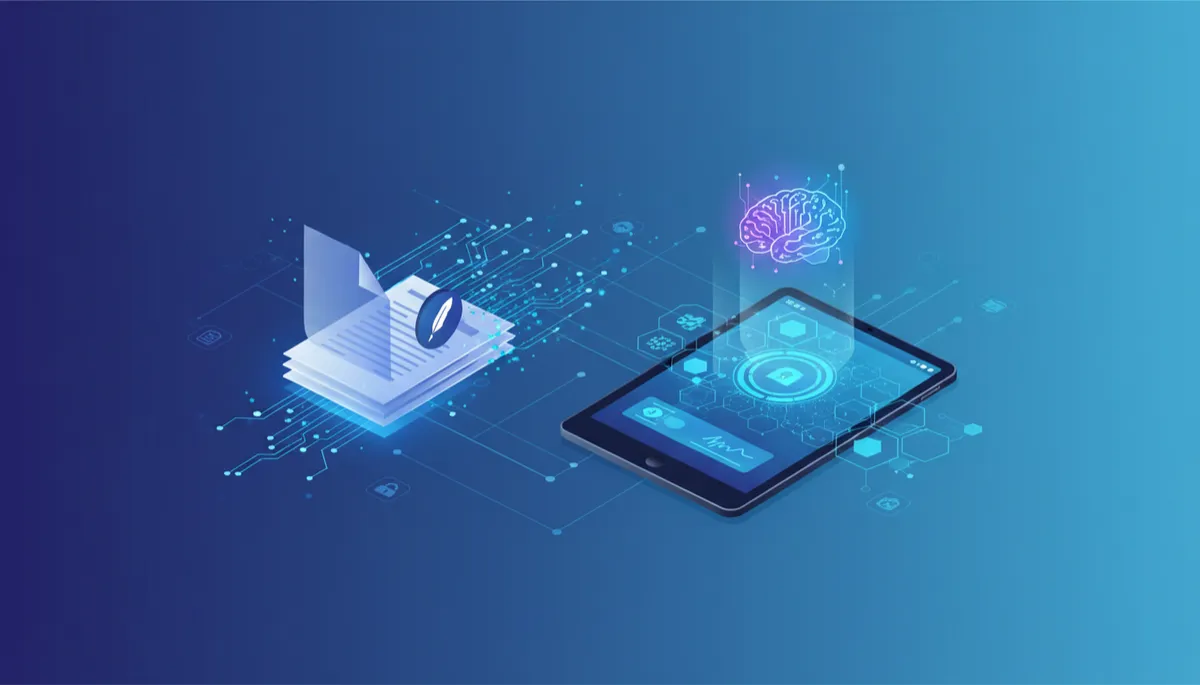
Notary Industry 2026: AI & Blockchain Revolution
Notary Industry, Digital Transformation, Paperless Services
The Notary Industry in 2026: From Paper-Based Tradition to AI-Driven, Blockchain-Secured Services
By 2026, the notary industry is no longer a quiet, paper-stacked corner of the professional world. It is rapidly becoming a high-tech, digital-first service ecosystem powered by Artificial Intelligence, Blockchain Technology, and secure Remote Notarization platforms. For legal, real estate, financial, and compliance professionals, understanding this shift is now a strategic necessity—not an optional curiosity.
2026: A Turning Point for the Notary Industry
Industry observers have been predicting a shift toward digital notarization for years, but 2026 marks the point at which Digital Transformation becomes the default rather than the exception. According to the National Notary Association, Remote Online Notarization (RON) is on track to be widely adopted as more jurisdictions finalize permanent legislation supporting secure online notarizations (National Notary Association, 2023). At the same time, market analysts project the remote notarization market to reach roughly USD 1.8 billion by 2026, driven by enterprise demand for Paperless Services and integrated digital workflows.
For professionals, this means the Notary Industry is no longer simply about stamping documents across a desk. It is becoming a critical component of secure, compliant, and scalable digital transactions—particularly in sectors such as real estate, banking, insurance, cross-border commerce, and legal services. The traditional, in-person, paper-based appointment is being replaced by a secure, auditable experience that can unfold on a laptop or smartphone anywhere in the world.
From Paper-Based to Paperless Services: Redesigning the Notary Workflow
Historically, notarization has been synonymous with physical paper, wet signatures, and in-person verification. Files were stored in cabinets, journals were handwritten, and audit trails were fragmented across multiple locations. In 2026, Paperless Services are redefining that experience end to end. Documents are created, shared, signed, notarized, and archived digitally, often within a single platform that integrates with case management, CRM, or loan origination systems.
Preparation: Clients upload documents to a secure portal, where templates and checklists guide them through required fields, ID documents, and disclosures.
Execution: Signers and notaries meet via Remote Notarization platforms using video conferencing, multi-factor authentication, and digital signatures.
Archiving: Finalized documents are stored electronically, often anchored to Blockchain Technology for tamper-evident proof of integrity and time of execution.
The benefits are immediate for professional teams: reduced printing and shipping costs, faster turnaround times, and centralized records that can be searched, audited, and shared securely. For organizations managing high volumes of transactions—such as mortgage lenders or corporate legal departments—Paperless Services are no longer a sustainability initiative; they are a competitive advantage and an operational necessity.
💡 Pro Tip for Firms: Map your current notarization touchpoints across client journeys and identify where Paperless Services and Remote Notarization can eliminate bottlenecks, especially in time-sensitive transactions.
Remote Notarization: Accessibility Without Sacrificing Compliance
Remote Notarization sits at the heart of the 2026 transformation. Initially accelerated by pandemic-era needs, it is now being cemented into permanent statutes across many U.S. states and increasingly in international jurisdictions. Forbes notes that Remote Online Notarization is poised to become a standard practice by 2026, particularly in real estate closings and cross-border business transactions (Forbes Technology Council, 2023).
For professionals, the value proposition is clear:
Client convenience: Signers can complete notarizations from home, office, or abroad, removing geographic and mobility barriers.
Operational resilience: Remote Notarization keeps deals moving even when in-person meetings are impossible due to travel restrictions, health concerns, or scheduling conflicts.
Stronger records: Sessions are typically recorded, with detailed logs of IDs used, timestamps, and actions taken—creating richer evidence than a traditional paper journal.
Far from weakening compliance, these digital workflows can enhance it. Regulators and professional bodies increasingly recognize that secure Remote Notarization, when combined with robust identity verification and encryption, can exceed the safeguards of legacy, in-person processes.

Integrated AI and blockchain tools give professionals stronger audit trails than traditional paper logs.
Artificial Intelligence: The New Co-Pilot for Notary Professionals
Artificial Intelligence is emerging as a powerful co-pilot for notaries and the organizations that rely on them. Rather than replacing human judgment, AI systems in 2026 are designed to automate repetitive checks, surface risks, and ensure consistency across large volumes of transactions. Forbes and other legal tech sources highlight several high-impact use cases where AI is already reshaping the Notary Industry.
Identity verification: AI-powered tools compare ID photos to live video, detect document tampering, and flag anomalies that may indicate fraud, strengthening the “know-your-customer” layer of Remote Notarization.
Document analysis: Natural language processing scans documents for missing signatures, inconsistent dates, or prohibited clauses, reducing the risk of errors that can derail transactions.
Regulatory alignment: AI engines can be trained on jurisdiction-specific rules, prompting notaries and staff when a particular form, oath, or disclosure is required to maintain compliance.
For professional teams, this integration of Artificial Intelligence translates into fewer manual checks, lower error rates, and the ability to scale notarization support without a linear increase in headcount. It also enables more consistent application of internal policies across distributed offices and remote staff, which is crucial for regulated industries.
📌 Key Takeaway: Treat AI as a compliance and quality layer, not a replacement for human oversight. The most effective 2026 workflows blend human expertise with machine precision.
Blockchain Technology: Immutable Proof for a Digital-First World
If Artificial Intelligence is the brain of the new notary ecosystem, Blockchain Technology is its memory. By 2026, more platforms are using blockchain to anchor critical notarization data—such as hashes of documents, timestamps, and transaction identifiers—to a distributed ledger. This creates an immutable, tamper-evident record that can be independently verified without exposing confidential content.
For professionals, the implications are significant:
Enhanced security: Any post-signing alteration of a notarized document becomes immediately detectable by comparing it against the blockchain-anchored hash, reinforcing trust in digital records.
Cross-border recognition: In international transactions, blockchain-backed notarizations offer a neutral, technology-based proof layer that can supplement differing local standards.
Smart contracts: In some legal and commercial contexts, notarization events can trigger smart contracts to execute payments, release collateral, or update registries automatically once conditions are met.
Legal tech analysts expect Blockchain Technology to become a backbone for high-value, high-risk transactions where auditability and non-repudiation are essential, from corporate governance records to intellectual property assignments. In these settings, the notary’s role is elevated: they become a trusted initiator of events on a secure, global ledger.
Security, Accessibility, and the Evolving Role of the Notary Professional
The integration of Artificial Intelligence and Blockchain Technology is not simply about modernization; it is about simultaneously enhancing security and accessibility. Digital notarization platforms combine encryption, biometric checks, AI-based fraud detection, and immutable audit trails to create a more secure environment than a traditional office visit, where IDs might be glanced at briefly and records stored in a physical book.
At the same time, Remote Notarization dramatically broadens access. Clients in rural areas, individuals with disabilities, expatriates, and globally distributed teams can reach qualified notaries without travel or delays. Regulators and professional bodies are actively refining frameworks to ensure that this expanded accessibility does not dilute legal safeguards but instead leverages technology to reinforce them (American Bar Association, 2023).
For notaries themselves, this Digital Transformation means evolving from a primarily transactional role to a more advisory, technology-enabled function. Professionals who understand both the legal foundations of notarization and the capabilities of AI-driven, blockchain-backed platforms will be best positioned to serve enterprise clients and cross-border matters in 2026 and beyond.
How Professionals Can Prepare for the 2026 Notary Landscape
Whether you are a law firm partner, corporate counsel, real estate broker, or financial services executive, now is the time to align your operations with the transformed Notary Industry. Consider the following steps as you plan for 2026:
Audit your current notarization processes. Identify where paper-based workflows, in-person-only appointments, or fragmented record-keeping create friction, cost, or compliance risk.
Evaluate Remote Notarization platforms. Look for solutions that combine Paperless Services, robust identity verification, AI-powered checks, and optional Blockchain Technology for high-value transactions.
Train your teams. Ensure notaries and support staff understand new legal frameworks, platform features, and cybersecurity best practices involved in digital notarization.
Engage with regulators and industry bodies. Participate in consultations and professional associations to stay ahead of evolving standards and to help shape practical, technology-aware regulation.
Conclusion: A More Secure, Accessible, and Strategic Notary Ecosystem
The year 2026 represents a clear inflection point for the Notary Industry. What was once a highly localized, paper-based, in-person profession is evolving into a sophisticated, digital-first service layer embedded in global commerce. The convergence of Paperless Services, Remote Notarization, Artificial Intelligence, and Blockchain Technology is enhancing both security and accessibility, while redefining how professionals and clients experience notarization.
For professionals, the message is straightforward: those who embrace this Digital Transformation will gain faster, safer, and more client-friendly workflows—and a strategic edge in a competitive market. Those who cling to purely paper-based, in-person models risk higher costs, slower transactions, and growing misalignment with regulatory and client expectations. In 2026 and beyond, the most successful organizations will treat modern notarization not as an administrative afterthought, but as a core capability in building trust, closing deals, and operating securely in a digital-first world.
