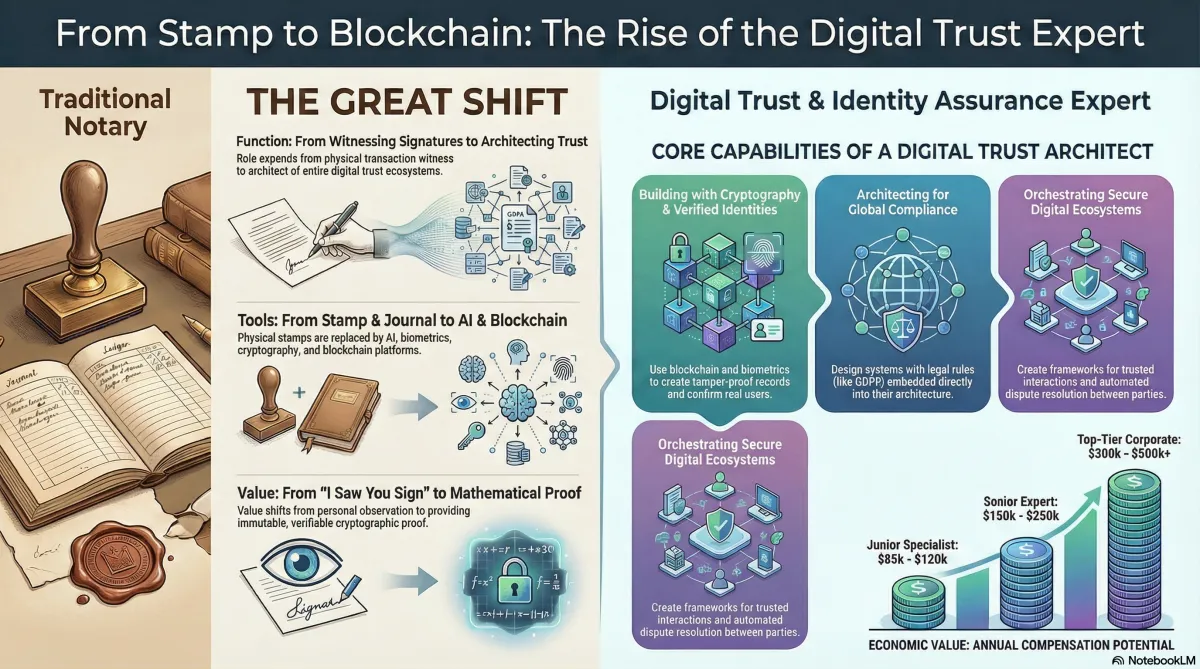
Why You Need a Digital Asset Notary Now
Digital Assets, Professional Services, Compliance
Why Professionals Need a Digital Asset Notary Now, Not Later
As business moves further online, the question is no longer whether your work is digital, but how you can prove what happened, when, and by whom. That is exactly where a digital asset notary becomes essential for modern professionals.
What Is a Digital Asset Notary?
A digital asset notary is a service that creates tamper-evident proof of a file, message, or transaction at a specific point in time. Instead of stamping paper, it records a cryptographic fingerprint of your asset, usually anchoring it to a public, time-stamped ledger such as a blockchain. The result is an independently verifiable certificate that shows:
What the asset was (its exact digital content)
When it existed (trusted timestamp)
Who registered or signed it (identity or organization)
Crucially, the service does not need to see or store your confidential content. It works with a mathematical representation of the asset, allowing you to keep documents private while still proving their authenticity and integrity later.
Why This Matters for Professionals
For professionals, reputation is built on trust, evidence, and clear accountability. A digital asset notary strengthens all three. Whether you are an attorney, consultant, architect, engineer, creative director, or financial advisor, you routinely handle documents and data that may be challenged months or years later.
Consider typical scenarios:
A client disputes which version of a contract was agreed upon.
A design or strategy deck is leaked, and you must prove original authorship.
Regulators or auditors ask for evidence that specific disclosures or reports were delivered on time and unchanged.
In each case, a digital asset notary can provide a neutral, machine-verifiable record that backs your professional narrative with hard proof. It reduces reliance on email trails, local file timestamps, or cloud logs that can be questioned or altered.
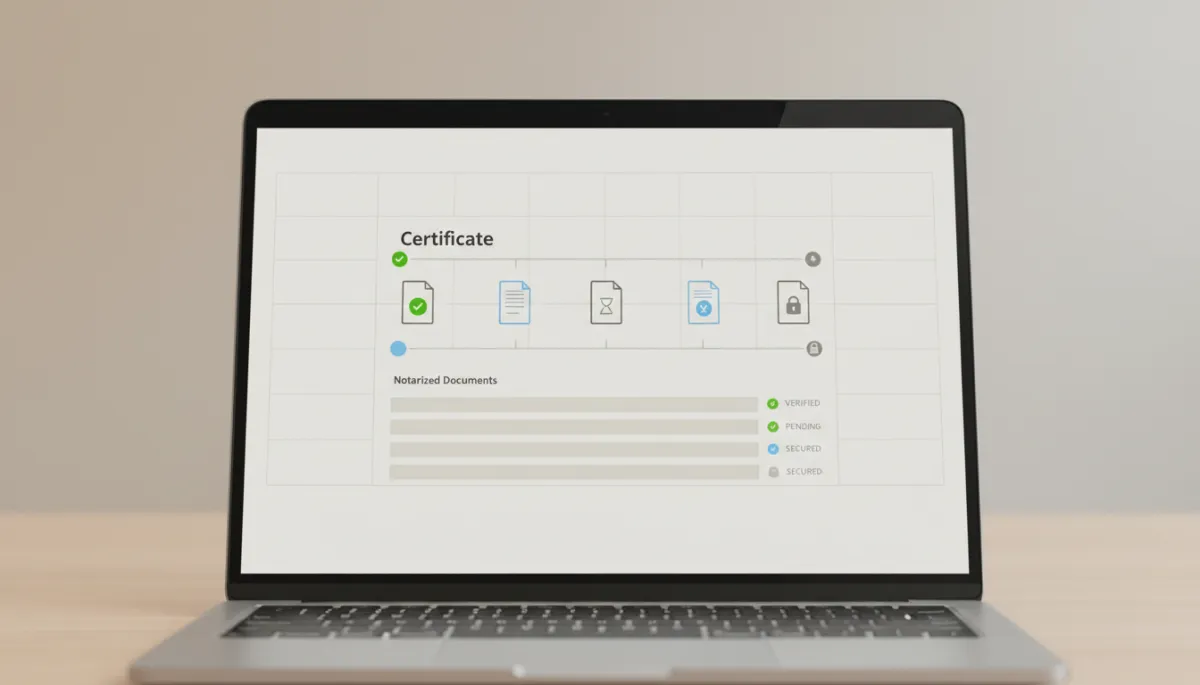
A unified notarization dashboard turns scattered files into auditable, time-stamped records.
Key Benefits for Client-Facing and Regulated Roles
For client-facing professionals, a digital asset notary becomes a differentiator. You can reassure clients that every proposal, deliverable, and signed agreement is protected with independent verification. This is especially valuable in high-stakes engagements, where disputes can be costly in both time and reputation.
In regulated sectors, notarization supports compliance and audit readiness. Financial firms can prove that risk reports and disclosures were locked at a given time. Healthcare providers can demonstrate that consent forms and policy notices were not altered after signing. Even when regulations do not explicitly require digital notarization, the ability to show a secure chain of evidence can significantly reduce friction with auditors and regulators.
💡 Pro Tip: Start by notarizing only your highest-impact assets—contracts, signed approvals, and final deliverables—then expand once the process is embedded in your workflow.
Integrating a Digital Asset Notary into Everyday Work
Modern digital asset notary platforms are designed for professionals, not technologists. Many integrate directly with tools you already use: e-signature platforms, document management systems, cloud storage, or practice management software. With these integrations, notarization becomes a background process that runs when you finalize a document, send a client package, or log a key decision.
The goal is not to add complexity, but to create a quiet layer of digital certainty beneath your daily work. When questions arise, you can produce a clear, verifiable record instead of relying on memory or fragmented evidence. For professionals whose value rests on trust, that certainty is quickly becoming non-negotiable.
